
Why Parent Involvement in Play Helps Children Thrive
Play becomes even more powerful when kids share it with trusted adults. Parents, grandparents, aunts and uncles, and family friends all play an essential role in shaping how children experience learning, curiosity, and connection through play.
Children naturally look to adults for guidance and validation. When the adults around them participate in play, even in small ways, it signals that their ideas and imagination matter. This encouragement builds confidence and strengthens the emotional bond between child and caregiver.
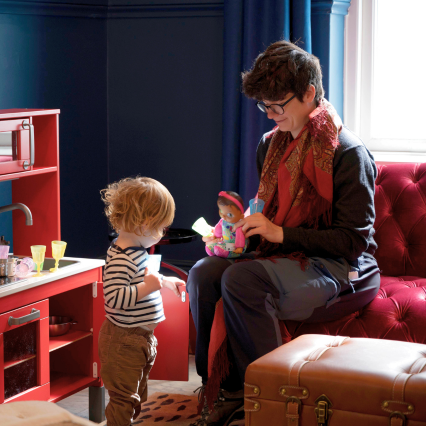
Shared play also increases learning opportunities. Adults introduce new words, ask thoughtful questions, and encourage children to think about what they are doing. A simple activity like building with blocks can become a conversation about shapes, balance, or a rocket to the moon!
The presence of trusted adults also helps kids develop emotional regulation. When frustration occurs at playtime, as it inevitably will, supportive adults help children navigate those feelings and learn persistence. These small moments teach big lessons of resilience and patience.
Social development is another major benefit. Children who regularly play with caregivers practice communication, cooperation, and turn-taking. The key is not directing the play, but participating in it. Instead of taking over the activity, adults can follow the child’s lead, respond to their ideas, and celebrate their creativity.
For busy families, even small moments of shared play make a difference. Ten minutes of focused playtime is enough for a shared experience that builds trust, curiosity, and connection between children and the people who care for them.