
How Play Supports Child Development: Why Toys Matter More Than You Think
Kids are wired to play. Long before structured lessons or formal schooling begin, play builds a strong foundation for a lifetime of learning and development. Through play, children explore the world, test ideas, and build essential skills that shape how they think, communicate, and connect with others and understand themselves.
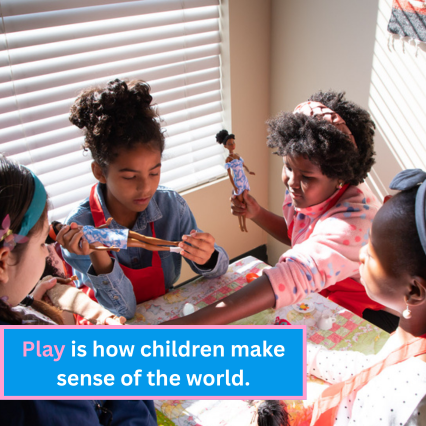
Research in early childhood development consistently shows that play strengthens brain development. According to the Harvard Center on the Developing Child, responsive interactions and hands-on exploration help build core brain architecture. When children manipulate objects, build structures, or create imaginative scenarios, they activate neural pathways responsible for reasoning, language development, and memory. These experiences help young brains build connections that support lifelong learning.
Play also strengthens language skills. Conversations during play—whether children are explaining rules, inventing stories, or describing what they are building—expand vocabulary and encourage communication. Even simple activities like playing with toy vehicles, dollhouses, or building blocks prompt storytelling and dialogue.
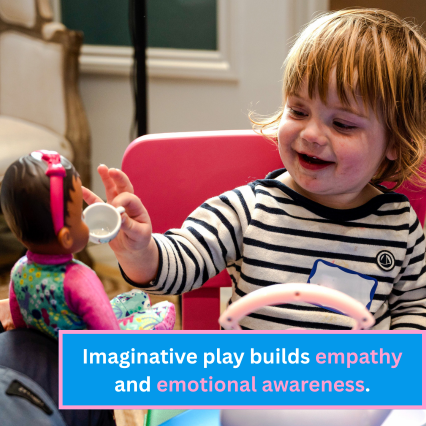
Emotional development is another powerful outcome of play. Through imaginative scenarios, children practice empathy and emotional regulation. A child pretending to care for a toy figure is learning about nurturing. Group games teach cooperation, patience, and how to manage frustration when things do not go as planned.
Experts at The American Psychological Association state that creativity thrives during unstructured play. Unlike passive entertainment, hands-on play invites children to invent new ideas and solutions. A simple toy can become a spaceship, a house, or a treasure chest depending on the child’s imagination. This creative flexibility strengthens problem-solving skills and builds confidence in independent thinking.
For families looking to support healthy development, play does not require complicated systems or elaborate setups. Simple toys that encourage open-ended exploration often create the richest learning experiences.